McElroy works closely with distributors, contractors, and end users in Chile, Central America, and the Caribbean to promote the application of high standards in the mining, oil, and other industries—developing faster, safer, and higher-quality projects.
Recently, the TracStar® line reached Peru’s Antamina Mine. Located in central Peru, Antamina Mine produces hundreds of tons of copper concentrate each year from an average elevation of 4,300m – or approximately 14,000 feet above sea level.
“We brought a state-of-the-art TracStar® iSeries machine to address the challenge at Antamina,” said McElroy International Marketing Manager Nayib Joussef. “The key question was how the equipment would perform at high elevation, over 4,500 meters above sea level, as it was the first time it had been tested in such conditions.”
The result? It performed flawlessly—both mechanically and operationally.
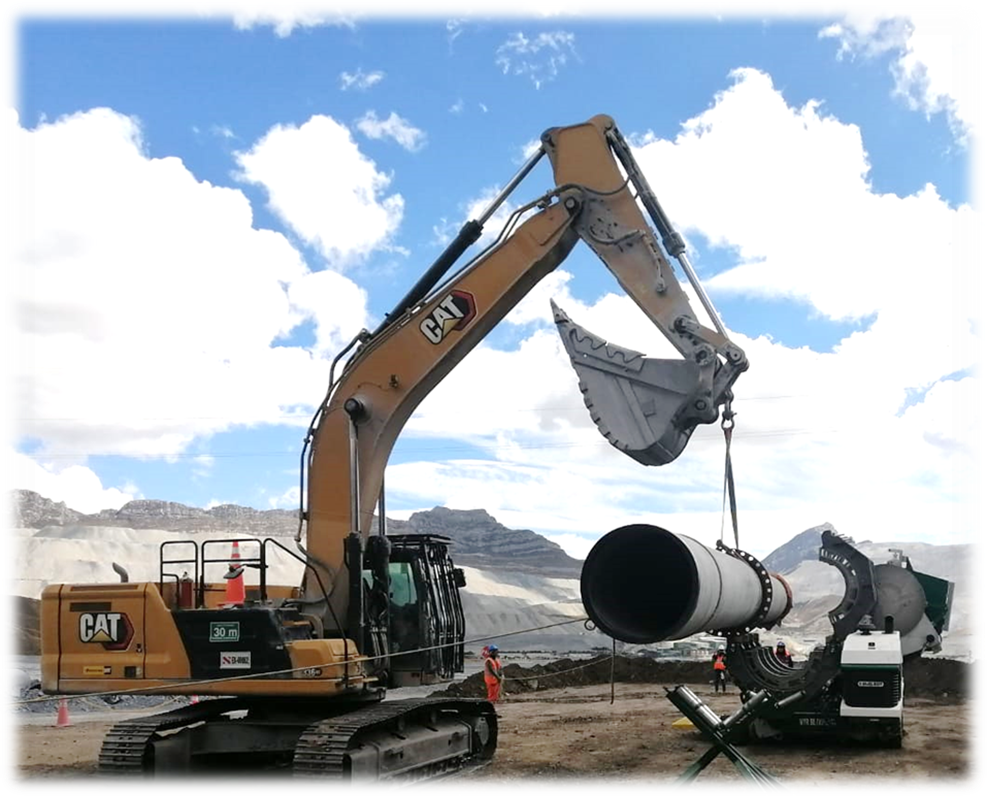
“This iSeries machine is the result of over 25 years of experience with TracStar® technology. In this latest version, we considered performance in complex and high-altitude environments,” Joussef said. “It features a reinforced frame, a more powerful engine, and robust hydraulic and cooling systems—precisely to operate under extreme conditions. It’s important to remember that the Andes is the second highest mountain range in the world, after the Himalayas—where, so far, mining is not yet taking place.”
In June 2025, Joussef was interviewed by a representative from Mineria Pan-Americana, a magazine geared toward the South American mining industry. Nayib’s question-and-answer style interview is outlined below:
Q. What are McElroy’s main markets in Latin America?
A. McElroy is based in Tulsa, Oklahoma. We have four international business units: the oldest is in England; the Chile office is the second oldest, followed by Perth, Australia, and Bangalore, India. From Santiago, we oversee South America (from Colombia to Argentina), while Central America and the Caribbean are managed from the U.S. In South America, our main market is mining.
In the mining industry, our technology has become a standard. Over time, project owners have realized that a failure is very costly—not only financially, but also in terms of reputation. Therefore, investing in technology has become a priority.
In other world-class markets like oil and gas, where errors are simply unacceptable, we’ve been very successful. A single mistake can lead to a fatal incident, so quality is non-negotiable.
Q: What do you see as the main challenges in Latin America?
A. Latin America offers many opportunities, but also major challenges. One of the region’s challenges is the vast distances between countries. However, there are shared factors—such as culture and language—that help bridge these gaps.
Another challenge is the late adoption of technology. TracStar® machines have been around for 28 years, but we’ve mostly introduced them in Latin America in the last five years, especially after the pandemic.
The non-metallic mining industry has been even slower to adopt technology. In lithium projects, we see progress in Argentina. Chile, however, is falling behind. It’s difficult to introduce new technology in a region where initial cost still carries a lot of weight, and labor remains relatively inexpensive.
In summary, there are many challenges in Chile that we don’t face in Argentina.
Q. How does the company manage logistics in the region?
A. We work in each country through distributors. Our preferred business model is via local distributors, who are responsible for maintaining inventory, spare parts, and certified technicians. With support from our factory when necessary, they provide assistance to end customers.
We have official distributors in Colombia, Peru, Chile, Argentina, and Suriname. In Brazil, Ecuador, and Bolivia, we have partners. Our goal is to have one distributor in each country. Brazil, however, is a different case within Latin America due to many tariff barriers.