In some circumstances, there can be a small increase in pressure above drag after the initial bead up at the beginning of the heat soak cycle. This can be seen on the DataLogger® graph and is due to thermal expansion of the pipe during heating.
During the bead up cycle, the initial bead that is formed comes from the material that is melted and squeezed out of the contact area between the pipe ends and the heater as initial bead up pressure is applied. For most common fusion standards this is to establish good contact with the heater plate surface and is a visual check for initial melt formed around the circumference of the pipe.
The purpose of the heat soak cycle is to rest the pipe ends against the heater plate while not applying any Interfacial Pressure (IFP). When the machines shifts into heat soak (drag pressure) and the directional valve is set in the center position, the hydraulic fluid in the cylinder is held against a closed center valve.
During this heat soak cycle, the melt bead forms as the pipe material expands. If the pipe or fitting ends are cold or the melt flow index (MFI) of the material is high, the material will push back against the locked cylinders causing this gradual increase in pressure.
Once the material has reached its molten state and overcomes its own surface tension the material will begin to flow, expand and form the heat soak bead and pressure will begin to fall gradually back under heat soak pressure.
This is completely normal and has no adverse effects on the fusion as no pressure is applied to the pipe. This applies to all fusion practices, whether controlled by manually selecting the valves or through the FusionGuide™ Control System.

Indication on Vault™ joint report
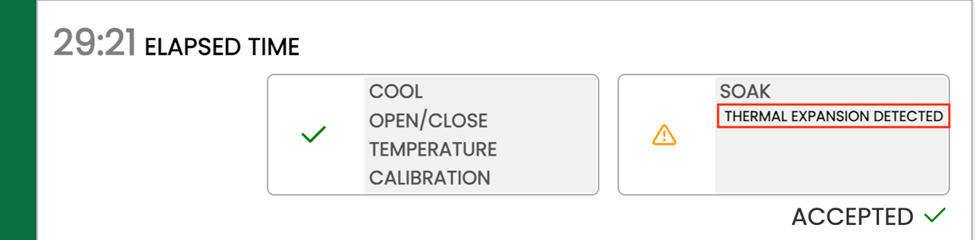
The Vault™ examines each pressure point within or prior to the start of the soak charting region for any indications of thermal expansion. A note on the Vault™ joint report indicates that thermal expansion may have contributed to a “soak” exception and states “thermal expansion detected.”
McElroy continues to improve this process by monitoring and refining the method of detection. As with all other exception reporting, the Vault™ algorithm will never reject a record and all notes and warnings indicate the need for further review/analysis by a user.